Public bodies
Evaluations of programmes and standards, measurement frameworks, prevalence studies, baselines for the review of laws, and economic modelling.
Standard-setters
Independent evaluation of standards systems and programmes, and research partnerships on the workers, farmers and communities they cover.
Industry
CSDDD impact research: effectiveness studies built on the Directive’s own indicators, and readiness for the Forced Labour Regulation.
Clients and research partners
- International organisations and public bodies
- OECD · UNICEF · GIZ · UN Global Compact Network Germany · West African Health Organisation · The Greens/EFA group in the European Parliament




- Standard-setters and civil society
- Fairtrade International · Rainforest Alliance · Solidaridad · Science Based Targets initiative · Global Labor Justice–International Labor Rights Forum · JUST Capital · FarmStrong Foundation · CEGEMI · HIV Prevention Trials Network







- Companies and investors
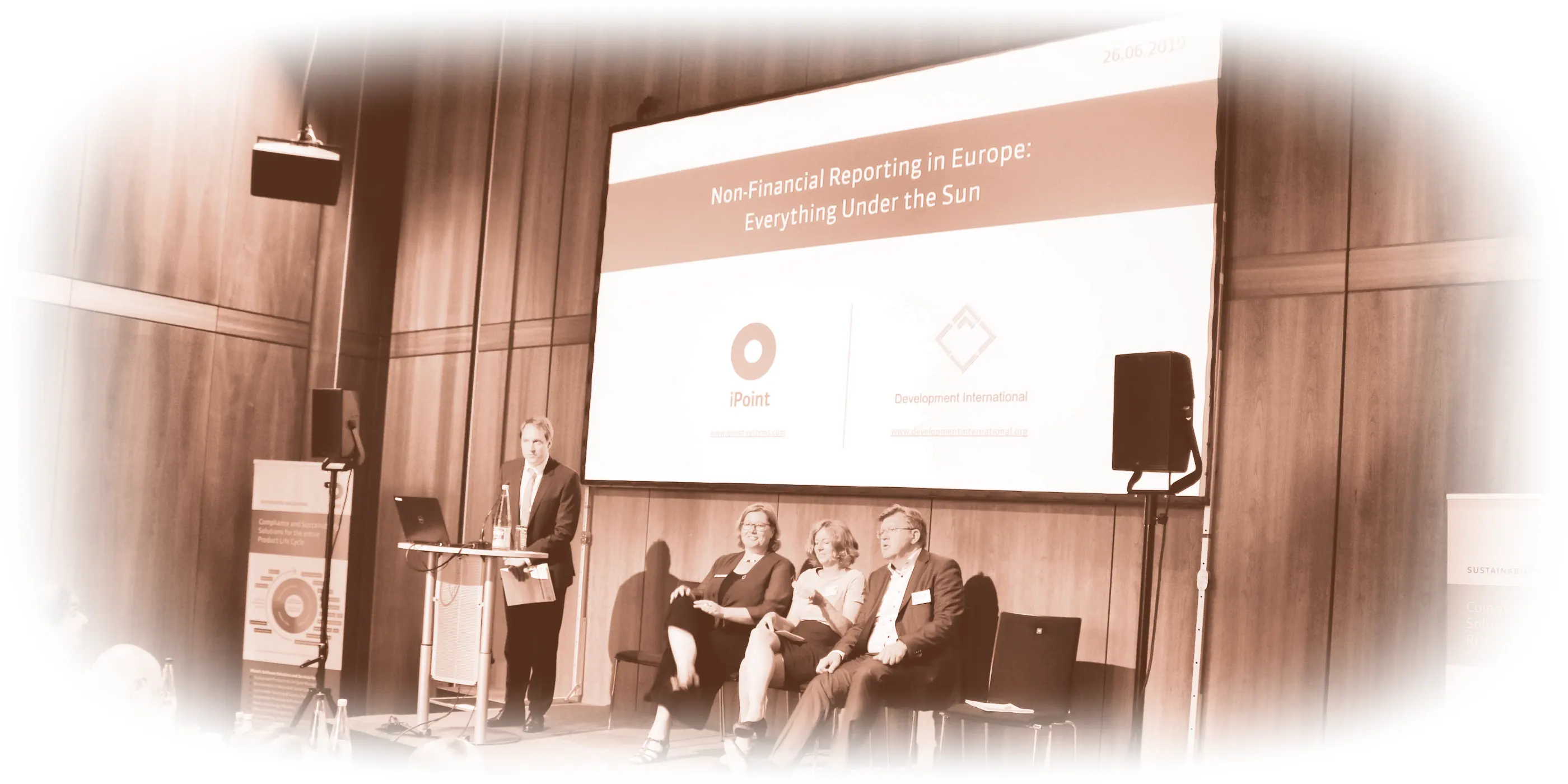
- Barry Callebaut · CCLA · iPoint systems · Assent · Ulula · Responsible Trade






- Universities and research institutes
- ENSEA Abidjan · Université Catholique de Bukavu · ESPC Kinshasa · ISSER, University of Ghana · University College London · Exponential Science (formerly DLT Science Foundation) · Seoul National University





What every engagement has in common
Every engagement starts from a question the commissioner has to answer, and ends with a defined deliverable that answers it. We say at the outset what kind of claim the evidence will support.
Scoring frameworks are fixed before scoring begins and published with each study. Commissioned assessments use the same methods as our public benchmarks. Our methods
Commissioned research remains scientifically independent: the findings rest on the evidence alone. That is what makes the findings usable in front of regulators, boards, members and critics at the same time.
Most of our research is published, as our statutes require. Confidential studies stay confidential. The methodological lessons they teach us do however improve our public work.
Informed consent, anonymity and safeguarding, especially where children are involved, and indirect questioning where direct questions could put people at risk.
Registered in Berlin, recognised as gemeinnützig, and overseen by an elected board. No surplus is distributed. How we are governed
Start with the question
Tell us what you need to know, or send us the terms of reference, and we will propose a research design, a team and a timeline.